Bloomington Urban Forestry Research Group
Indiana University Bloomington

2018 News

DECEMBER 2018  Forested Watersheds and Urban Forest Patch Connectivity in Bloomington, IN

Link to project on the Climate Change Response Framework site

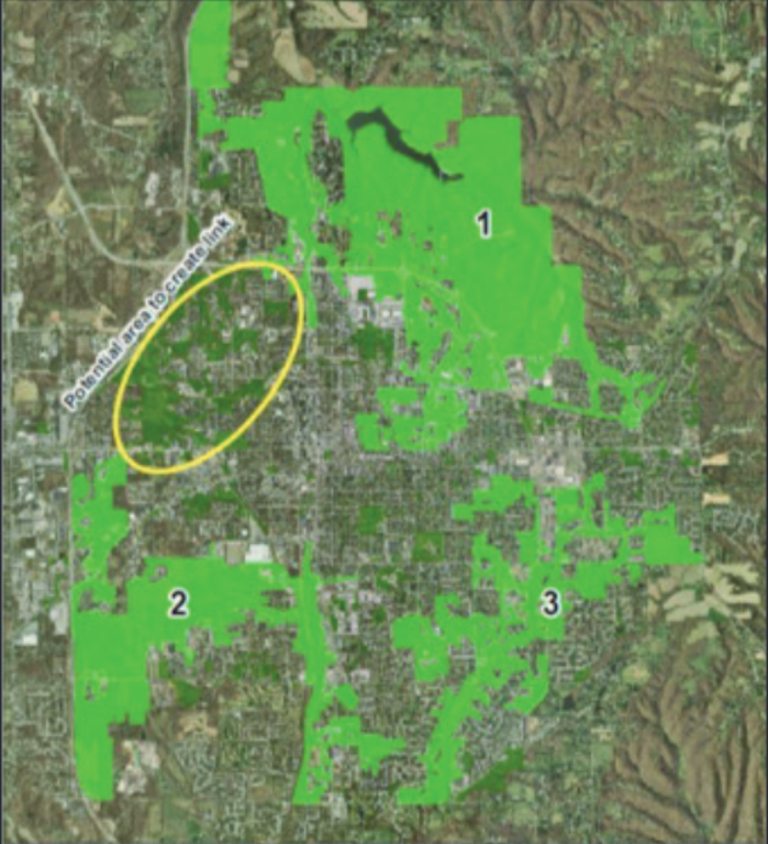
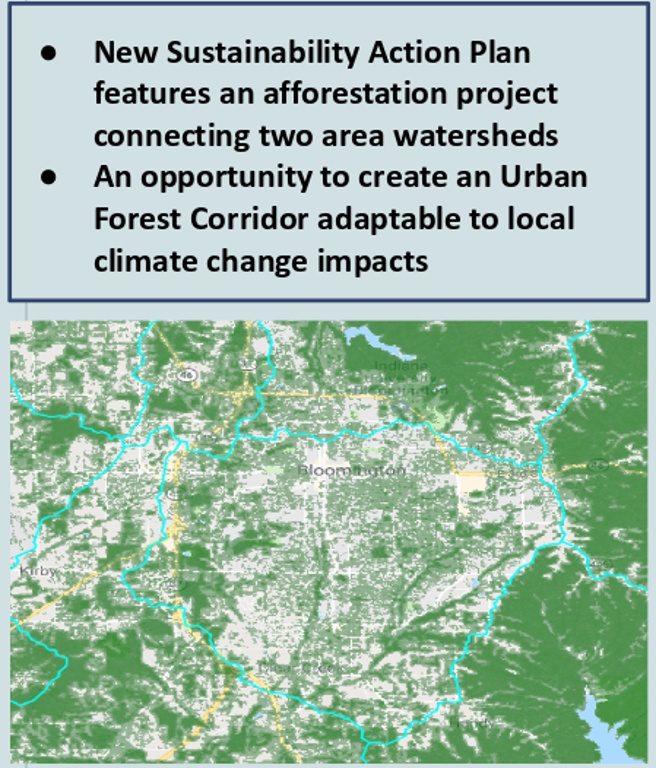
Stephanie Freeman-Day with Burney Fischer assisting completed the  on-line course “Adapting Urban Forested Watersheds to Climate Change” offered by the USFS Northern Institute of Applied Climate Science (NIACS) and running from November through December 2018.  Our project builds upon and complements the Bloomington Urban Forestry Strategic Plan 2014-19, the recent completion of the City’s Sustainability Action Plan (Fall 2018) and the recently awarded contract to  conduct a citywide street tree re-inventory and canopy cover analysis for the City of Bloomington (2019). The specific patches considered for this project are Griffy Nature Preserve and the Clear Creek watershed, which will be connected via both streetscape and forest patch restoration with attention to tree species composition that addresses environmental change impacts and vulnerabilities.  The final PPT presentation outlines the project. A more complete white paper proposal from the project will be presented to the Bloomington Tree and Environmental Commissions as well as other entities in winter/spring 2019.
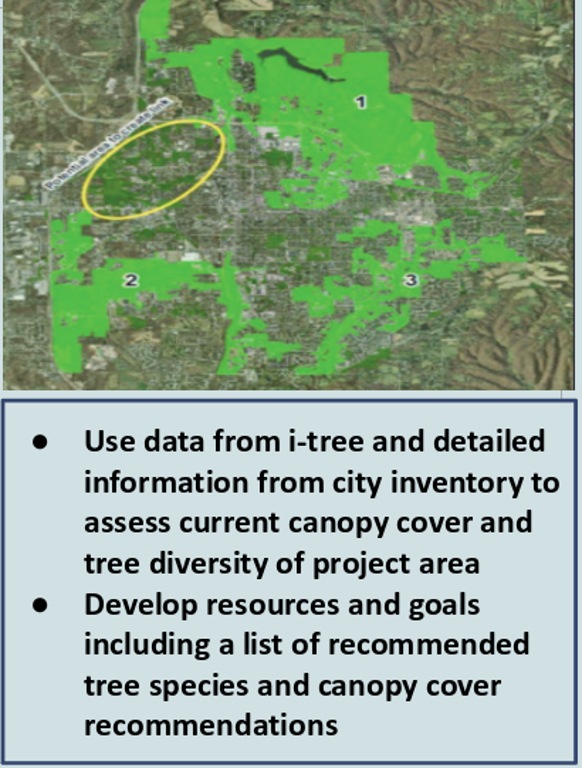
 Forested Watersheds and Urban Forest Patch Connectivity in Bloomington, IN
Adapting Urban Forested Watersheds to Climate Change

NOVEMBER 2018 Adapting Bloomington’s Urban Forest to Climate Change

Stephanie Freeman-Day with Burney Fischer assisting are taking the on-line course “Adapting Urban Forested Watershed to Climate Change” offered by the USFS Northern Institute of Applied Climate Science (NIACS) and running from November through December 2018.  This is a second offering by NIACS of their Climate Change Response Framework specifically for an urban forestry audience. Stephanie’s project for the course is “Assessing Potential Urban Forest Patch Connectivity in Bloomington IN.” The initial idea is to build upon products like the Bloomington Urban Forestry Strategic Plan 2014-19; the recent completion of the City’s Sustainability Action Plan and soon to be, announced citywide street tree re-inventory and canopy cover analysis.  A pilot area will be selected and we will use urban forest data (tree canopy cover, patch species composition, etc.) to make recommendations for the rehabilitation of the urban forest based on climate change impacts and vulnerabilities. A white paper from the project will be presented to the Bloomington UF Tree Commission.

Adapting Bloomington’s Urban Forest to Climate Change
The Woodland Cacmpus brochure has been updated for 2018

OCTOBER 2018: The Woodland Cacmpus brochure has been updated for 2018

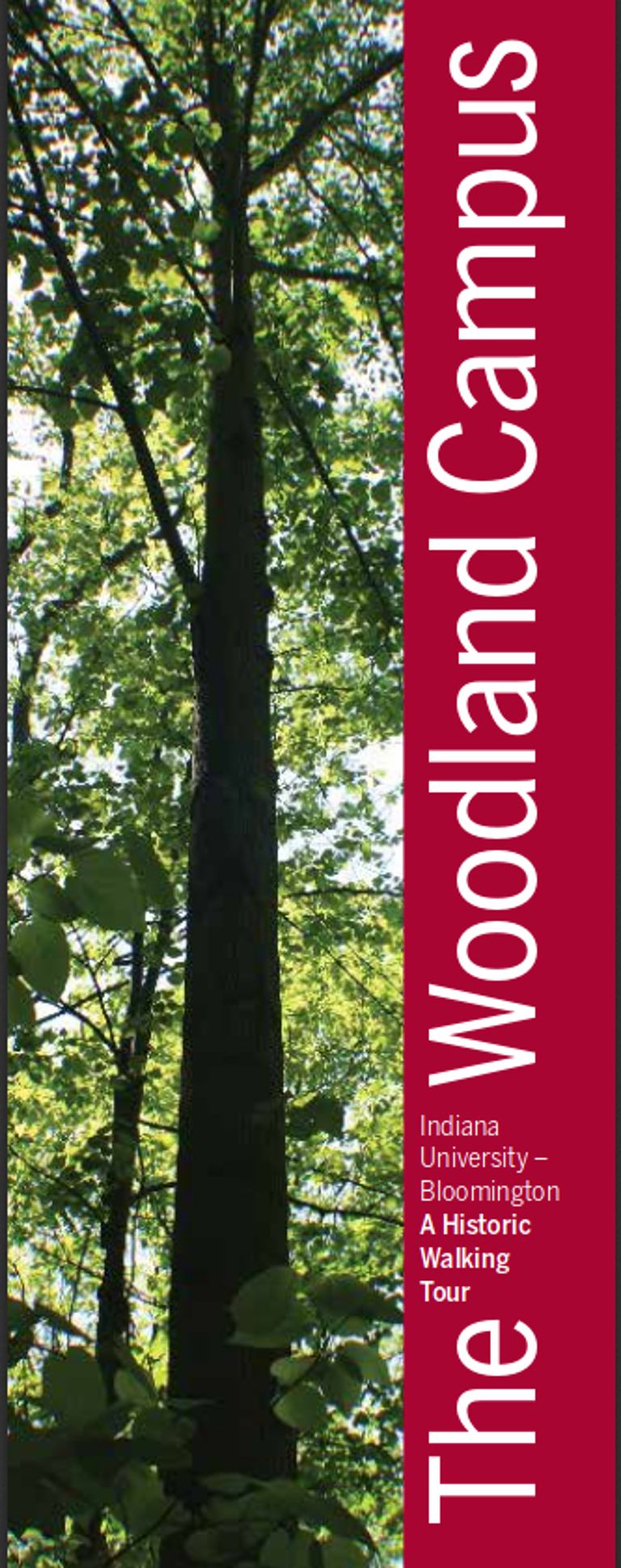
In 2009 Sarah Mincey and Burney Fischer developed the IUB brochure “The Woodland Campus” to replace several long out of print versions of the brochure idea.  This SPEA publication was a huge success and has been reprinted as well as provide on-line ever since. The Woodland Campus Tour (pages 13-20) was used by many students and visitors to appreciate the campus trees and learn how to identify common tree species.  Over time the Tour has become outdated so the publication was recently updated and published by the Indiana University Integrated Program in the Environment (second edition, 2018), supported by a grant from the Indiana University Office of the Bicentennial. It was authored by Senna Bryce Robeson and Sarah Mincey with contributions from Zoe Need. (https://spea.indiana.edu/doc/about/woodland.pdf)

Stephcharlie

SEPTEMBER 2018: Two new researchers join BUFRG

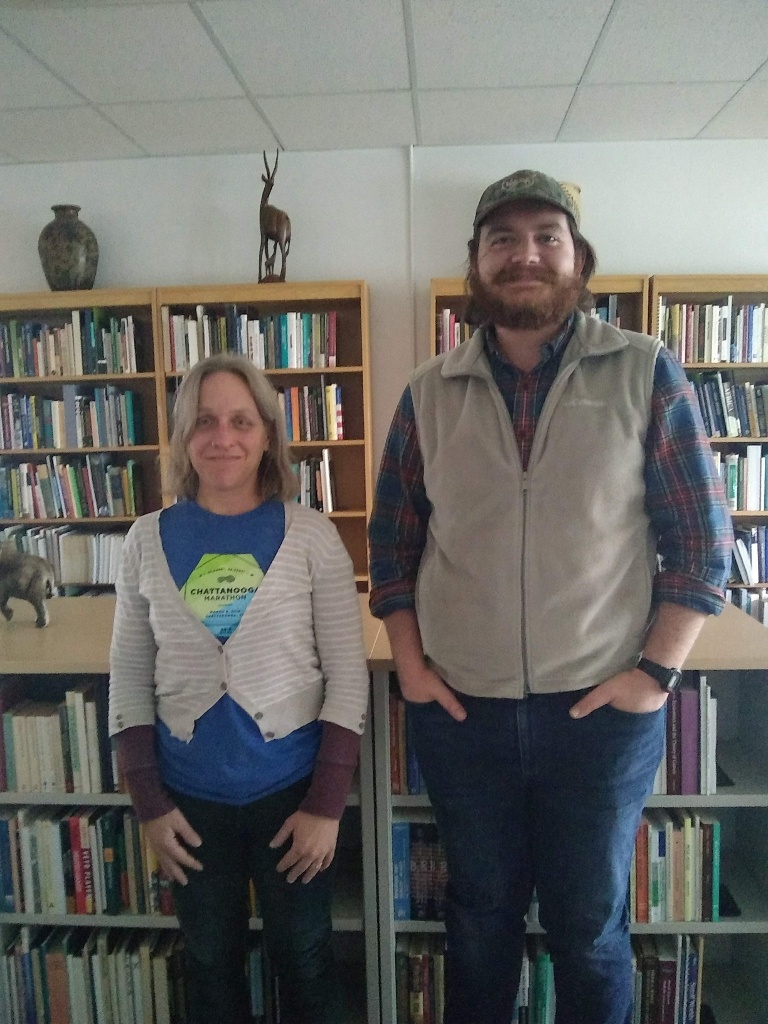
IUB SPEA master students Stephanie Freeman-Day (MES – Municipal Sustainability, Candidate 2019) and Charlie Devoe (MPA – Environmental Policy and Natural Resource Management, Candidate 2019) have joined the BUFRG campus based research team.  They are both working with Burney Fischer on the project “How are Indiana municipal urban forestry programs addressing sustainability and climate change?”

Vogt receives Early Scientist Award

AUGUST 2018: Vogt receives Early Scientist Award

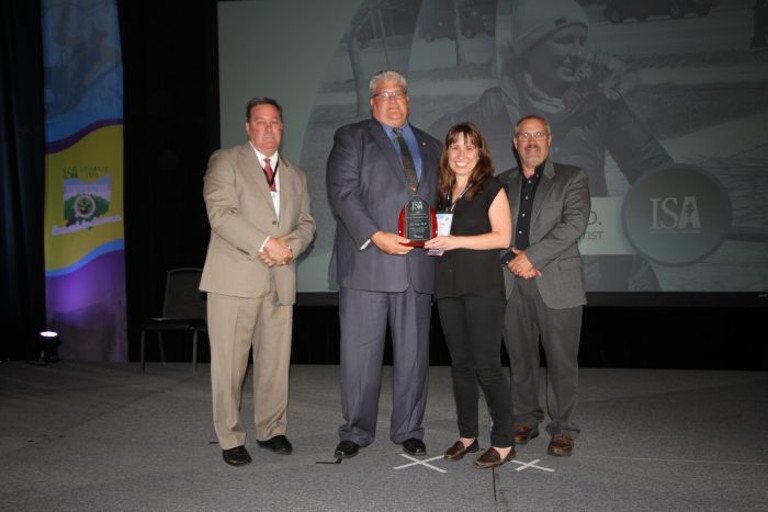
SPEA alum Jess Vogt MPA-MSES '12, PhD '14 received the 2018 International Society of Arboriculture's Early Career Scientist Award for her exceptional promise in arboricultural research.

“Dr. Vogt has accomplished a great deal early in her career, impacting not only the research and practice of arboriculture, but increasing our understanding of how arboriculture and urban forestry interfaces with other professions,” says Paul Ries, ISA Board President. “Her enthusiasm for her students, for education, and for the fields she studies is evident and admirable.”

Vogt’s research lab at DePaul, the Lab for Urban Forestry in the Anthropocene (LUFA), enables her students to study how urban forests, the people who care for them, and communities are managing challenges like climate change. ”The Anthropocene is the new era that scientists say we’ve entered because of the massive impacts human activity has on the planet,” explains Vogt. ”LUFA studies how urban forests can contribute to the sustainability of communities in the Anthropocene. We have a website that we use to house publications and information about projects, so I have a place to point those who are asking for more information about my research and teaching.”

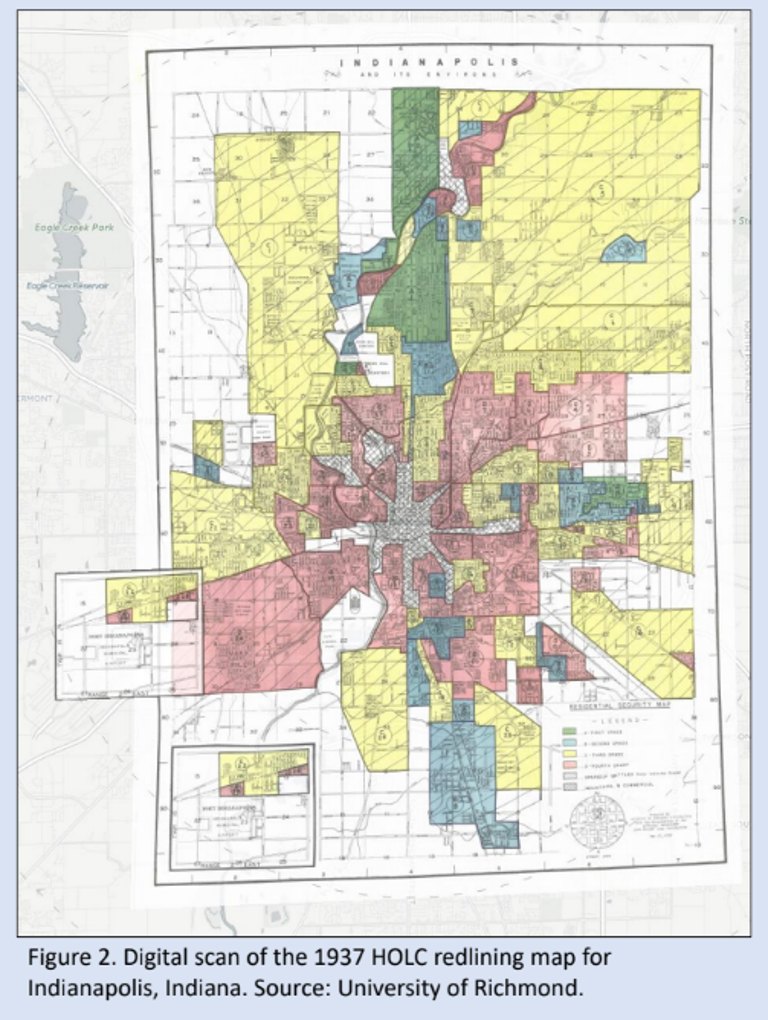
Digital scan of the 1937 HOLC redlining map
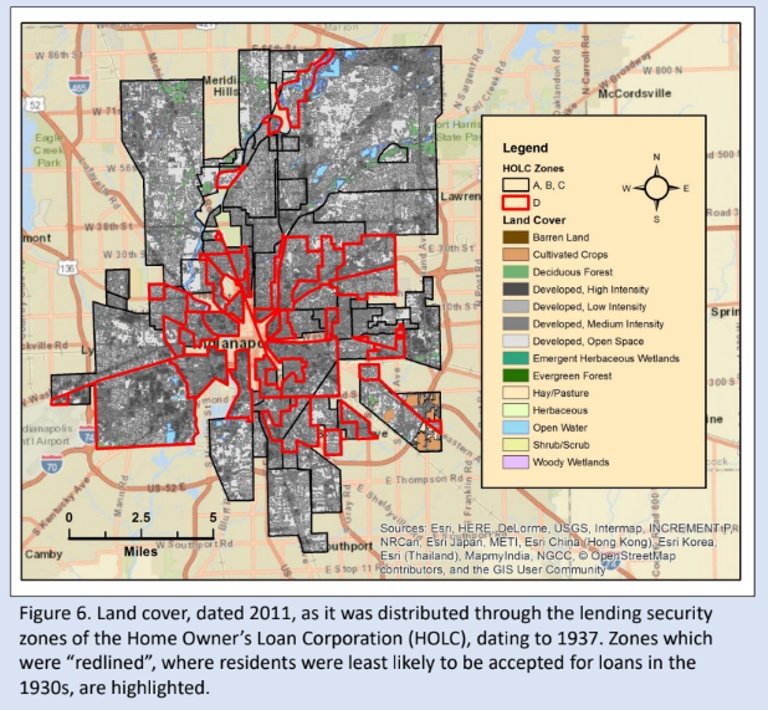
Land cover, dated 2011, as it was distributed through the lending secrity zones of the Home Owner's loan Corporation (HOLC)

JULY 2018 Exploring the ecological legacy of redlining maps in Indianapolis

A continuing BUFRG project by Master’s student Donovan Moxley (MSES/MPA, 2018) explores the ecological legacy of the Home Owner’s Loan Corporation Redlining maps in Indiana, he focused his first effort on Indianapolis 80 years later.  A poster paper presented at the spring 2017 IUB Integrated Program for the Environment Research Exhibition is an early outcome of this work; a draft paper is also nearing completion.

The poster paper reviews how Redline mapping, as practiced by the Home Owner’s Loan Corporation (HOLC) in the 1930s, has been linked to lower modern urban tree canopy measurements in four US cities. Analysis using a geographic information system (GIS) was conducted in order to detect evidence of an ecological legacy of redlining in Indianapolis based upon the 1937 Redlining map.  Using this method, evidence of relatively high-intensity development, low greenspace and forest cover, and disproportionately high incidences of brownfield, Superfund sites, industrial waste sites, and Interstate highways were detected in historically redlined zones in Indianapolis. While opportunities for further and more detailed research are considered, the method employed here should be developed such that it is replicable for other cities with redlining histories in Indiana, there are maps available for over a half-dozen Indiana cities as well as in other states with comparable spatial datasets.

Moxley, D. (2017) Exploring the ecological legacy of redlining maps used by the Home Owner's Loan Corporation in Indianapolis: 80 years later.  IPEIES Research Exhibition and Awards Program, April 27, 2017 at IUB MSB-II.  

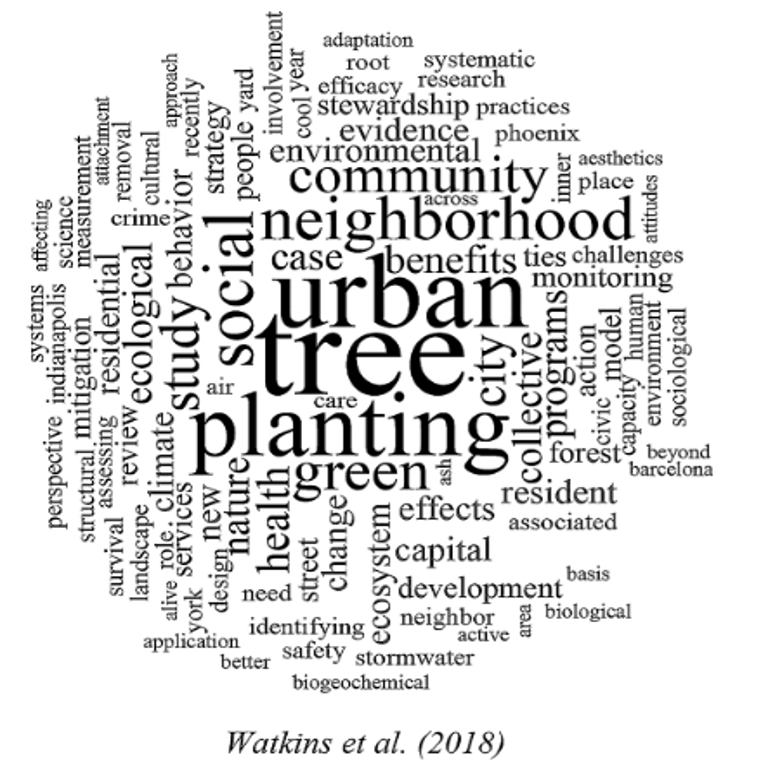
Watkins et al (2018)
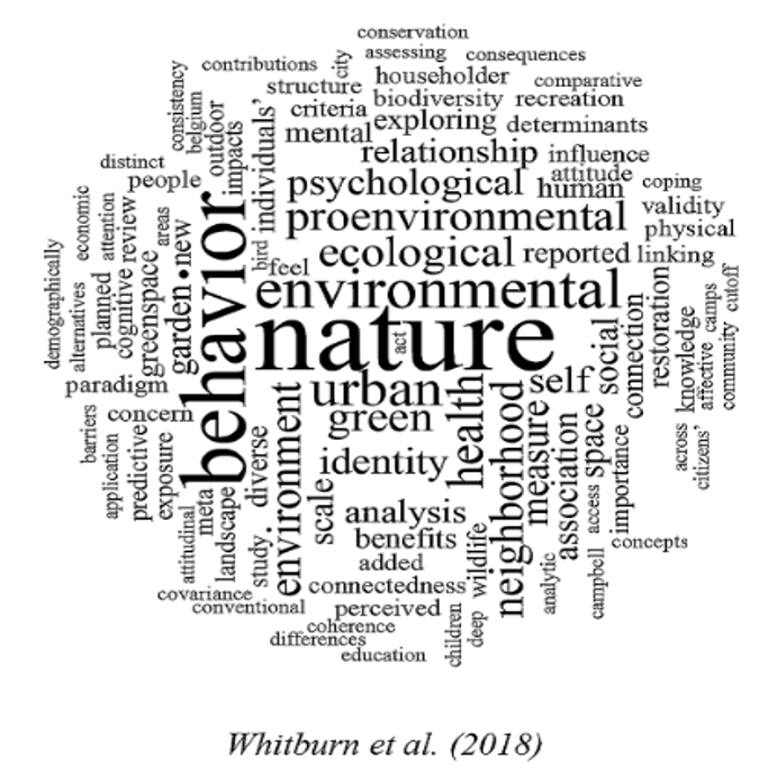
Whitburn et al. (2018)

JUNE 2018: “Ships that Pass in the Night” - Vogt Letter to the Editor (UF&UG, 2018)

Professor Jess Vogt’s letter to the editor regarding two original research pieces – both about the outcomes of tree planting, with similar research designs, each published in January 2018 (Whitburn et al. in Environment and Behavior, and Watkins et al. in Cities) – cite precisely zero journal articles in common, presents an intriguing commentary. She presents a qualitative and quantitative analysis of the citation lists of these two articles. Of 101 total journal articles cited across both pieces, she found no overlap in scholarly journal articles cited, and only three of 62 scholarly journals cited are in common. One of the pieces cites not a single article from Urban Forestry & Urban Greening. She uses the

comparison between these two articles (one of which she co-authored with BUFRG researchers) as an example of the potential pitfalls of inter- and transdisciplinary scholarship on the social benefits of urban greening. She ends the commentary with several practical steps we can all take as reflective and mindful researchers to reduce the likelihood that important insights from the literature are missed during all phases of research.

benefits of urban greening have a disciplinary cross-talk problem? Urban Forestry and Urban Greening, 32: 195-199. DOI: 10.1016/j.ufug.2018.03.010.

Ships that Pass in the Night

MAY 2018Volunteer and Partnership Baselines for USA Municipal Forestry

Jess Vogt and Burney Fischer were co-authors of “A Volunteer and Partnership Baseline for Municipal Forestry Activity in the United States” a paper recently published in Arboriculture & Urban Forestry.  Through a national census and survey of urban forestry activity in over 660 municipalities in the United States, researchers found two-thirds of all responding communities involve volunteers in tree activities. This increases from half of small communities (2,500 to 4,999 people) to all large communities (one million or more people) involving volunteers. When tabulated for the United States, a mean national estimate of 345,466 (195,754 SEM) people volunteered 1,484,204 (665,460 SEM) hours with municipal tree activities. This equates to 714 (320 SEM) full-time equivalent (2,080 hour-base year) positions. Overall, volunteers completed nearly 5% of municipal tree care activities. Nearly 80% of the municipalities train their volunteers. Tree planting (85% of communities) was the most common activity, followed by tree watering (40%), awareness/education programs (39%), tree pruning (28%), and fundraising (20%). Findings were contrasted with U.S. census population groups to disaggregate if volunteerism varied by community size. Volunteers were more commonly involved in communities with a greater urban-forestry capacity derived from a sustainability index score. Six attributes of municipal forestry program had either positive (+) or negative (-) effect on volunteer participation in urban forestry activities. These included adequate budget (-), per capita spending (-), tree board (+), outreach (+), strategic plan (+), and total employment (+).  

Hauer RJ, Timilsina M, Vogt J, Fischer BC, Wirtz Z, Peterson W. A volunteer partnership baseline for municipal forest activity in the United States. Agriculture and Urban Forestry 2018 44(2): 87-100.
Volunteer and Partnership Baselines for USA Municipal Forestry

APRIL 2018: Davey Tree Day at IUB UFM Class

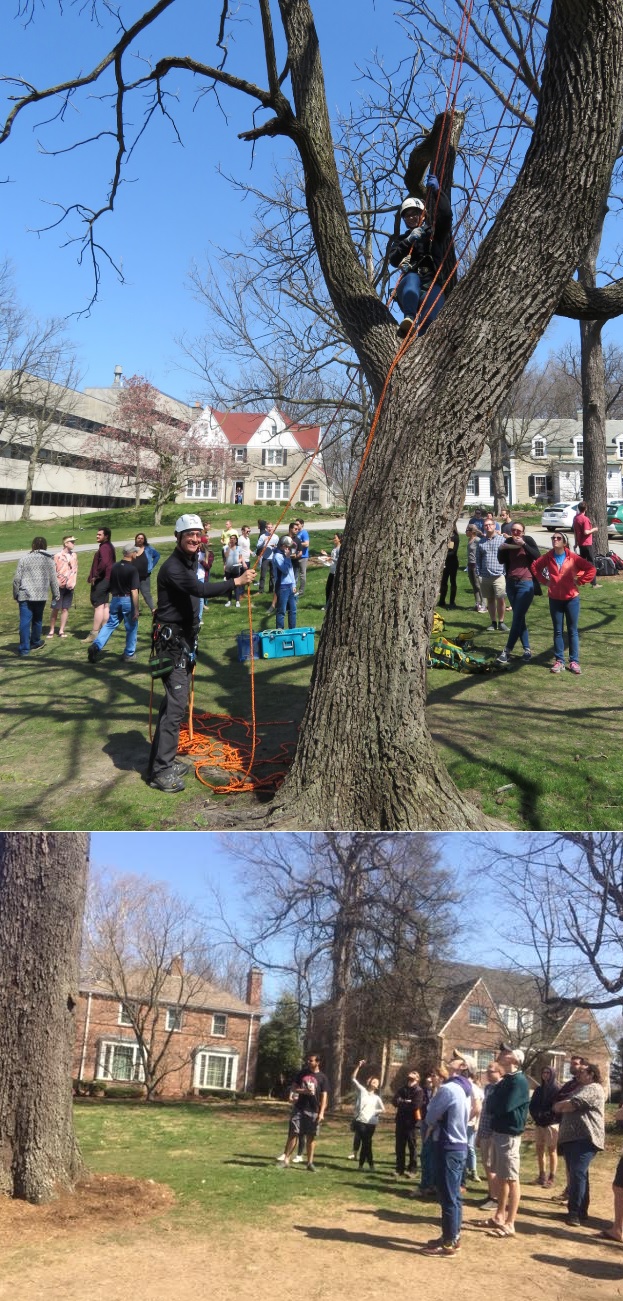
Burney Fischer hosted Davey Tree recruiter and tree climbing expert Mark Noark on April 12.  He showed the students how an arborist would climb a tree with emphasis on personal safety (top slide).  The Davey emphasis on Hazards, Obstacles, Planning and Escape (HOPE) was very prominent. In addition Davey Tree sales arborists Alison Herrell (SPEA MSES & UFM alumnus 2013) and Mike Volz joined Mark to explore with students how they make arboriculture decisions about standing trees as well as general insights about the green industry.  The field experience was conducted on the Wells House lawn next to SPEA and was a great experience for the students. After the class meeting the Davey folks conducted short informal interviews with interested students in the SPEA Career Development Center.

Volunteer and Partnership Baselines for USA Municipal Forestry

MARCH 2018: Four-City Study Finds Evidence of Moderate Social Benefits from Tree Planting

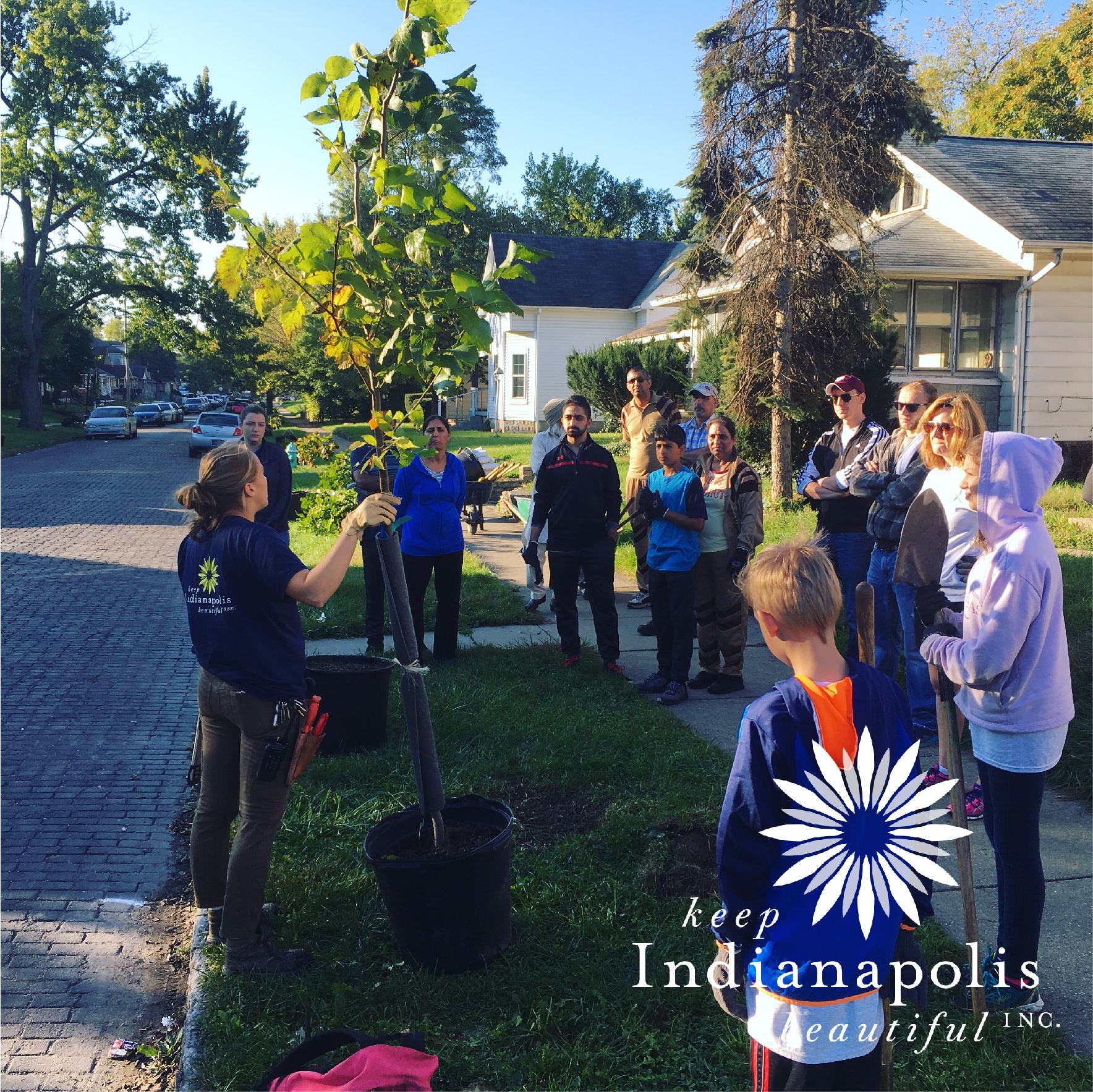
A BURFG study recently published in Cities reports that nonprofit tree-planting programs not only improve the neighborhood environment, but can also have some impact on the neighbors who live there. The study found evidence that tree-planting projects increase ties between neighbors and that residents reported many positive changes in their neighborhood, including improved aesthetics and neighbors being more active outside. However, plantings did not appear to have effects on deeper relationships, such as cohesion or trust between neighbors.

Findings suggest that tree planting can yield social benefits, but those benefits are not guaranteed. Nonprofits interested in community building should carefully consider program components designed to connect residents and encourage sustained engagement with the project.

The study reported findings from the largest interdisciplinary study of tree-planting to date; the BURFG team examined nonprofit tree-planting programs in four cities in the Midwestern and Eastern United States (Atlanta, Detroit, Indianapolis, and Philadelphia), collecting ecological and social information about tree-planting neighborhoods and matched comparison (non-tree planting) neighborhoods. This paper draws from a household survey of 1551 respondents in 197 neighborhoods. Shannon Lea Watkins (University of California, San Francisco) was lead author on this study. Co-authors were Jess Vogt, Sarah K. Mincey, Burnell C. Fischer, Rachael A. Bergmann, Sarah E. Widney, Lynne M. Westphal, and Sean Sweeney.

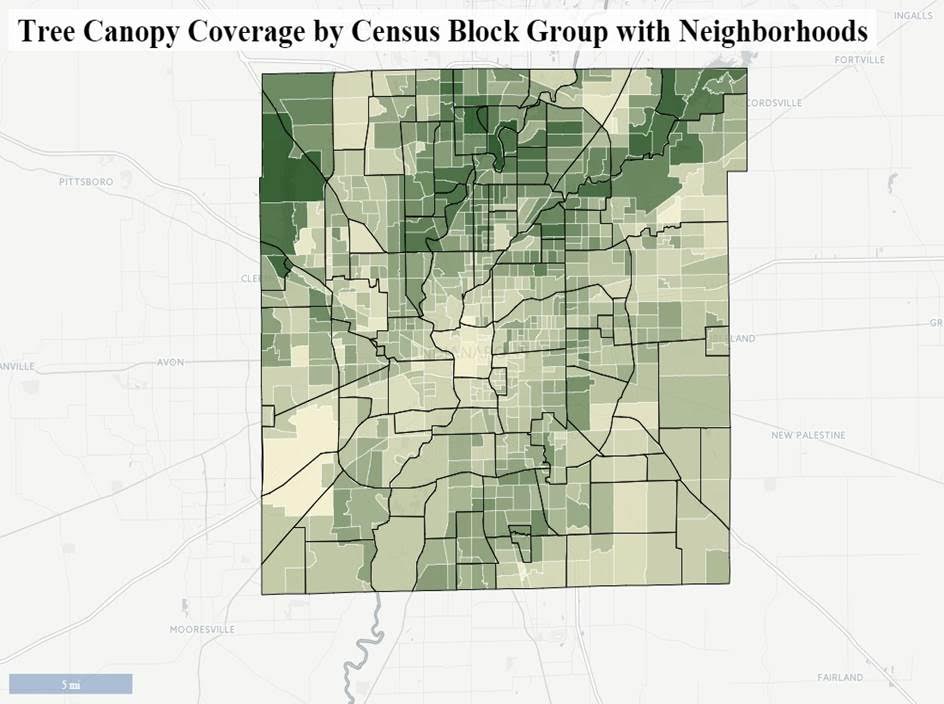
Tree Canopy Coverage by Census Block Group with Neighborhoods

FEBRUARY 2018: Meta-Analyses Find Significant Evidence of Race- and Income-Based Urban Forest Inequity

In two recently published studies, BURFG researcher Dr. Shannon Lea Watkins (University of California, San Francisco) and Dr. Ed Gerrish (University of South Dakota) found significant evidence of both race- and income-based urban forest inequity. Race-based inequity was particularly high on public land, where city governments and nonprofits have the most influence. Methodological differences explained some of the variation across original studies.

Urban forestry professionals and city governments should consider the equity consequences of urban forestry activities. As cities increasingly invest in urban environmental resources, they have a choice: do they continue a status quo approach that perpetuates a system of environmental injustice, or do they engage underserved communities in environmental protection and in so doing, promote environmental and health justice? Given the sensitivity of results to study methodology, authors of future studies should be thoughtful in methodological choices and conduct robustness checks.

This is the most comprehensive study of urban forest inequity to date. Watkins and Gerrish analyzed the results of 67 original studies that had estimated the statistical relationship between urban forest cover and neighborhood sociodemographic characteristics. They used meta-analysis to summarize findings across original studies, adjusting for variation in methodology, study location, and research lens across studies. The studies are published in the Journal of Environmental Management and Landscape and Urban Planning.  

  1. Watkins, S.L., E. Gerrish. (2018). The relationship between urban forests and race: a meta-analysis. Journal of Environmental Management. 209:152-168.
  2. Gerrish, E. & S.L. Watkins. (2018). The relationship between urban forests and income: a meta-analysis. Landscape and Urban Planning. 170: 293-308.
An outdoor shot of a green lamppost with a red banner that reads "Lead for the Greater Good SPEA" in white text, positioned in front of a modern limestone building with large glass windows under a clear blue sky.

JANUARY 2018: Fischer Again Offers Two Urban Electives at IU SPEA

Burney Fischer will teach E422/S422/E522 Urban Forest Management for the 13th consecutive year at in spring 2018.  The dual level class has 13 masters students, 2 undergraduate honors students and 25 undergraduate enrolled.  This elective course meets twice per week and is a combination of lectures, much class discussion, guest speakers from city government, nonprofits, industry and academia, and field experience in inventory, tree planting, tree care, etc.  Student teams will conduct small case studies on questions or situations provided by the City of Bloomington Urban Forestry Program and/or Keep Indianapolis Beautiful. 

In spring 2018 Burney Fischer will again lead E555 Urban Ecology, a readings and discussion course for 13 masters and 1 PhD student.  This year’s class is built around the new book “The Baltimore School of Urban Ecology: Space, Scale and Time” by Morgan Grove and colleagues.  The class develops a set of weekly topics to cover and then student teams locate peer reviewed and other articles, which are read before class each week to serve as the basis for discussion.  A professional book review and a research paper are products developed by individual students during the semester. From last year’s class these types of student projects resulted in a presentation at the Annual Ecological Society meeting (Blumenthal) and a paper recently submitted for publication (Dunn).